
Most people assume that when someone dies, the next step is to call a funeral home. The modern funeral industry has shaped that expectation for generations. Yet many families are surprised to learn that in much of the United States, you are legally allowed to plan and carry out funeral arrangements yourself.
Planning a funeral without a funeral home—sometimes called a family-directed funeral or home funeral—is not only legal in most states, but increasingly common. Families choose this option for many reasons: rising funeral costs, environmental concerns, religious traditions, or simply the desire to create a more personal farewell.
Still, this approach carries responsibilities. Paperwork must be filed correctly. Local health rules must be followed. Burial or cremation permits must be obtained. And families must decide whether they have the emotional and practical support needed to handle these tasks during a time of grief.
Understanding what is legally allowed—and what is realistically involved—can help families make thoughtful decisions when the time comes.
Understanding the Legal Reality
One of the biggest misconceptions about funeral planning is that a funeral home is legally required. In fact, most states allow a family member or designated representative to act in place of a funeral director.
That means families can legally manage many parts of the process themselves, including filing paperwork, arranging burial or cremation, organizing memorial services, and transporting the body.
However, the laws governing death care vary from state to state. Some states require a funeral director to be involved in specific steps, such as supervising cremation or filing the death certificate. Others allow families to manage nearly every aspect themselves.
The most important first step is always to check the laws in the state and county where the death occurs.
Even where DIY funerals are allowed, local regulations may govern transportation, refrigeration, burial permits, or private property burial.
Families considering this route should start by gathering accurate information before a crisis occurs.
Resource for Families Beginning the Process
Planning ahead makes everything easier during a difficult moment.

This free resource helps families begin organizing information that will eventually be needed for obituaries, announcements, and memorial services.
The First Steps After Someone Dies
Whether a funeral home is involved or not, certain legal steps must happen immediately after a death.
The first requirement is a medical pronouncement of death. A doctor, hospice nurse, or authorized medical professional must confirm the death and complete the medical portion of the death certificate.
Most states require this step within twenty-four to forty-eight hours.
Once the death is officially pronounced, the next step is filing the death certificate with the appropriate county or state office. This document becomes one of the most important legal records for the family. It will later be required for insurance claims, Social Security benefits, bank accounts, and property transfers.
Errors on a death certificate can create significant problems later, which is why reviewing it carefully before ordering copies is essential.
A single mistake on this document can delay estate settlement and financial claims for months.
Practical Guidance for the First Two Days
Families often feel overwhelmed during the first hours after a death.
This guide walks through the immediate steps that must happen, helping families avoid common mistakes during the most confusing stage.
Caring for the Body at Home
For families choosing a home funeral, caring for the body becomes one of the most personal aspects of the process.
Historically, this was normal. For generations, families washed, dressed, and watched over their loved ones at home before burial. The professional funeral industry gradually replaced these practices during the twentieth century.
Today, some families are returning to those traditions.
In most states, families may keep the body at home for a short period before burial or cremation, provided they follow state health regulations. These rules usually require that the body be buried, cremated, embalmed, or properly cooled within a certain timeframe.
Cooling methods can include refrigeration, cooling blankets, or dry ice placed beneath the body.
While this process can be meaningful for some families, it is not the right choice for everyone. Handling a loved one’s body can be emotionally intense and physically demanding.
The decision to care for a body at home should be made thoughtfully, with clear planning and support.
Some families choose to perform only certain parts of the process themselves while asking professionals for assistance with transportation or paperwork.
Burial and Cremation Without a Funeral Home
Even when families handle funeral planning themselves, burial or cremation typically still involves outside organizations such as cemeteries or crematories.
One option is direct burial, where the body is buried soon after death without embalming or a formal viewing. A memorial service can still be held later at a church, home, or community space.
Another option is direct cremation, which involves cremation shortly after death without a traditional funeral service. Many cremation providers work directly with families rather than requiring arrangements through a funeral home.
After the cremation, families may hold their own memorial service, celebration of life, or scattering ceremony.
Some families also explore home burial on private land. While this is allowed in some states, local zoning laws and environmental regulations often apply. County officials should always be consulted before planning a burial on private property.
Comparing Funeral Options
Many families struggle to compare costs and services when considering whether to use a funeral home.
This checklist helps families evaluate options and understand exactly what services they are paying for.
Common Pitfalls Families Should Avoid
Families who manage funeral arrangements themselves often encounter challenges that professionals normally handle.
One common issue is determining who has legal authority to make decisions. Most states recognize a single “agent for disposition” who has the final say regarding burial or cremation.
If multiple family members disagree about arrangements, conflicts can delay the process.
Transportation can also create complications. In some states, a private individual may legally transport a body in a personal vehicle, but only if they possess the proper permits and legal authority.
Another frequent problem involves missing paperwork. Burial permits, cremation authorizations, and death certificates must all be completed correctly before burial or cremation can occur.
Planning ahead and confirming legal requirements can prevent delays during an already difficult time.
The Emotional Reality of DIY Funerals
Handling funeral arrangements without a funeral home can be meaningful for some families. It allows them to create a deeply personal farewell and participate in traditions that feel more authentic.
But grief changes how people think and make decisions.
Tasks that seem manageable in advance may feel overwhelming when emotions are raw and family members are exhausted.
That is why many families choose a middle path: they remain involved in planning the ceremony while hiring professionals to assist with complex logistics.
The goal is not simply to save money or avoid the funeral industry. The goal is to create a farewell that honors the person who has died while supporting the people who remain.
Planning Ahead Makes Everything Easier
The most effective way to avoid stress during a funeral is to begin planning before a death occurs.
This planning tool helps families document wishes, organize key information, and prepare decisions in advance.
Writing the Obituary and Telling the Story of a Life
One of the most meaningful tasks after a death is writing the obituary. It is more than an announcement—it becomes part of the historical record of a life.
Yet many families struggle with where to begin.
An obituary must balance factual information with personal memory. It should clearly communicate the person’s life story while also providing practical details about services and memorials.
For families writing their own obituaries, guidance can make the process easier and less stressful.
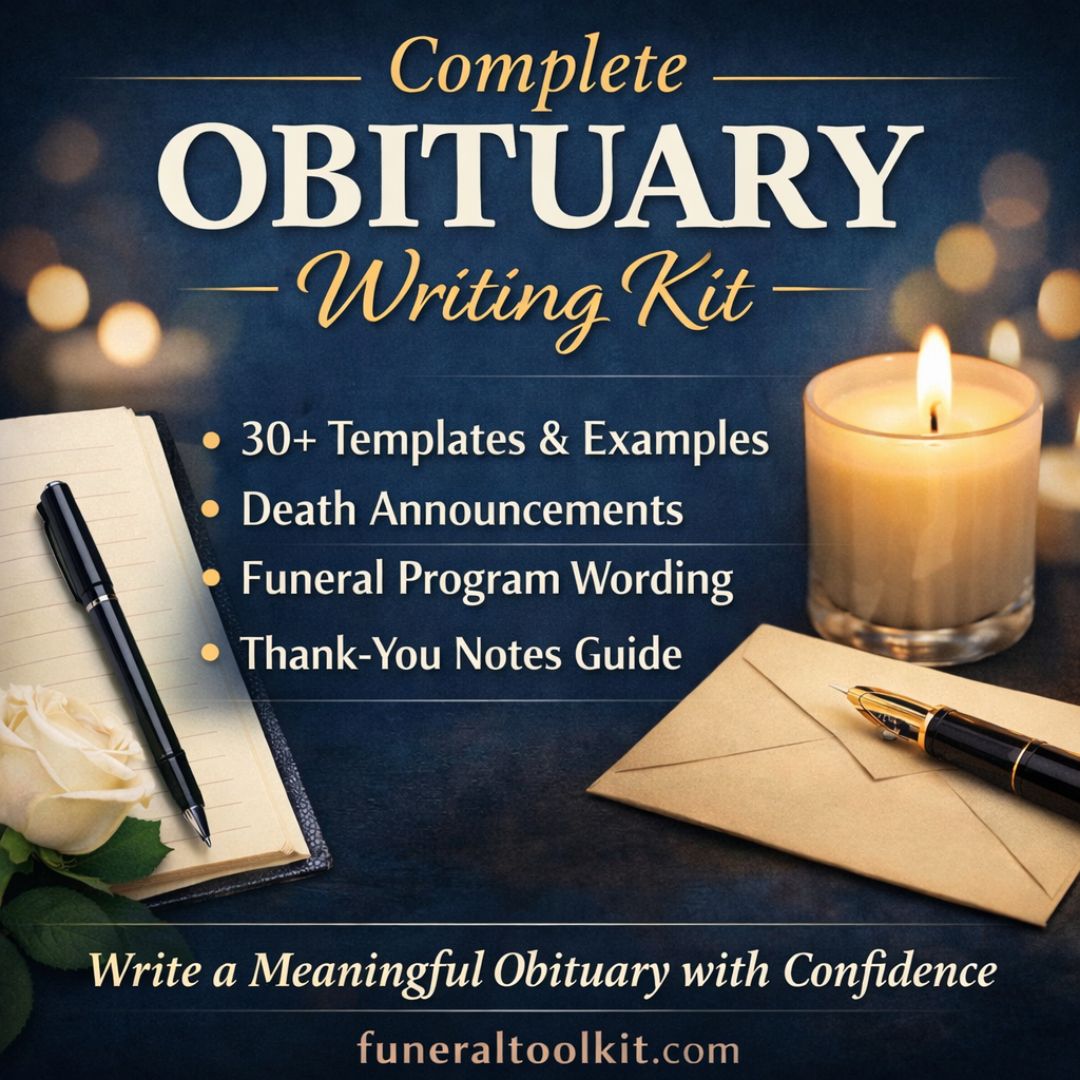
This resource helps families organize information, craft a meaningful obituary, and avoid common mistakes when submitting notices to newspapers or online memorial sites.
A Different Way of Saying Goodbye
The modern funeral industry provides valuable services, and many families find comfort in professional guidance. Yet it is important to understand that families also have choices.
For those willing to plan carefully and follow legal requirements, it is possible in many states to arrange a funeral without a funeral home.
Some families find that this approach allows them to create a more personal farewell. Others discover that the responsibilities are greater than expected and choose to involve professionals.
The most important decision is not whether a funeral home is involved, but whether the farewell reflects the life that is being remembered.
When families take time to plan, ask questions, and understand their options, they can create meaningful memorials that honor both tradition and personal values.